IPv6 Full Coverage & Sub-user API Overhaul
This is the largest infrastructure update since Platform 2.0. Every product tier now supports IPv6 endpoints natively, with full parity to IPv4 — including sticky sessions, geo-targeting, and per-user accounting. Alongside this, the sub-user API has been versioned to v2 with cleaner resource modeling and batch operation support.
Release by the numbers
2.4M+
IPv6 IPs Added
18
New API Endpoints
<0.4ms
Routing Overhead
New
Native IPv6 endpoints on all product tiers
All products now expose a dual-stack endpoint. Clients can force IPv6 by appending @ipv6 to the product string, or leave it unset for automatic selection.
#1204infra
Sub-user API v2 — batch operations & cleaner resource model
Create, update, or suspend up to 500 sub-users in a single request. The new POST /v2/sub-users/batch endpoint is idempotent and returns partial success payloads.
→ Migration guide from v1
#1198api
IPv6 geo-targeting with country + ASN filters
IPv6 pool now supports the same geo and ASN parameters as residential IPv4. Specify country=US&asn=AS15169 in the proxy auth string.
#1212routing
Improvements
Dashboard sub-user table now loads 3× faster
Switched to cursor-based pagination and server-side filtering. Tables with 100K+ sub-users now load in under 200ms on the first paint.
#1201ui
Reduced accounting microservice memory usage by ~40%
Rewrote the hot path in the accountant to use pooled byte buffers. Peak RSS under 500M req/day dropped from 1.8GB to 1.1GB per instance.
#1195performance
Webhook Reliability Fixes & Upstream Mixer Weights
Patch release addressing webhook delivery edge cases and adding fine-grained weight configuration to the upstream mixer. Also includes two small API improvements from beta customer feedback.
Fixes
Webhook delivery retry storm under high concurrency
Fixed an issue where failed webhook deliveries could trigger exponential retries simultaneously when a downstream target recovered from a brief outage. Now uses jittered backoff with a per-target concurrency cap of 4.
#1181webhooks
Sticky session IDs not persisting across SOCKS5 reconnects
Session tokens were being re-generated on TCP reconnect due to a missing read from the Redis session store. Sessions now correctly resume the same upstream IP for up to 10 minutes of inactivity.
#1178sessions
Bandwidth counter drift on sub-user rotation
Under certain race conditions when credentials were rotated mid-session, the accountant would double-count the final segment. Counters are now flushed atomically on rotation events.
#1172billing
Improvements
Upstream mixer now supports 0.1% weight granularity
Previously weights were integers (whole percent). You can now allocate as precisely as 0.1% per upstream, useful for gradually shifting traffic during provider migrations.
#1185routing
Upstream Mixer — Visual Config & Live Weight Switching
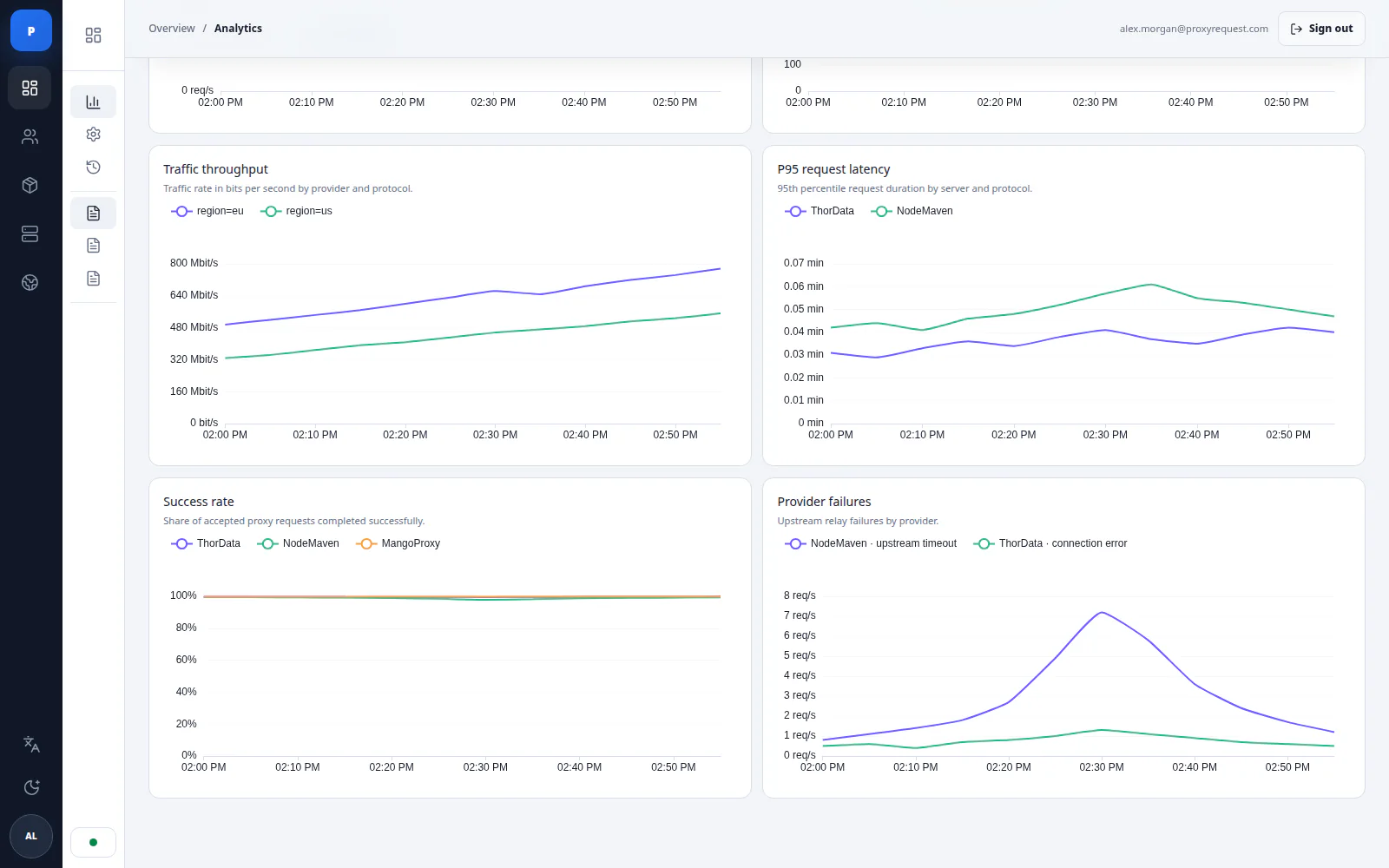
The upstream mixer is now fully configurable from the dashboard with live weight adjustments that take effect without disconnecting active sessions. Includes a new provider health scoring system that automatically deprioritizes degraded upstreams before they impact your customers.
New
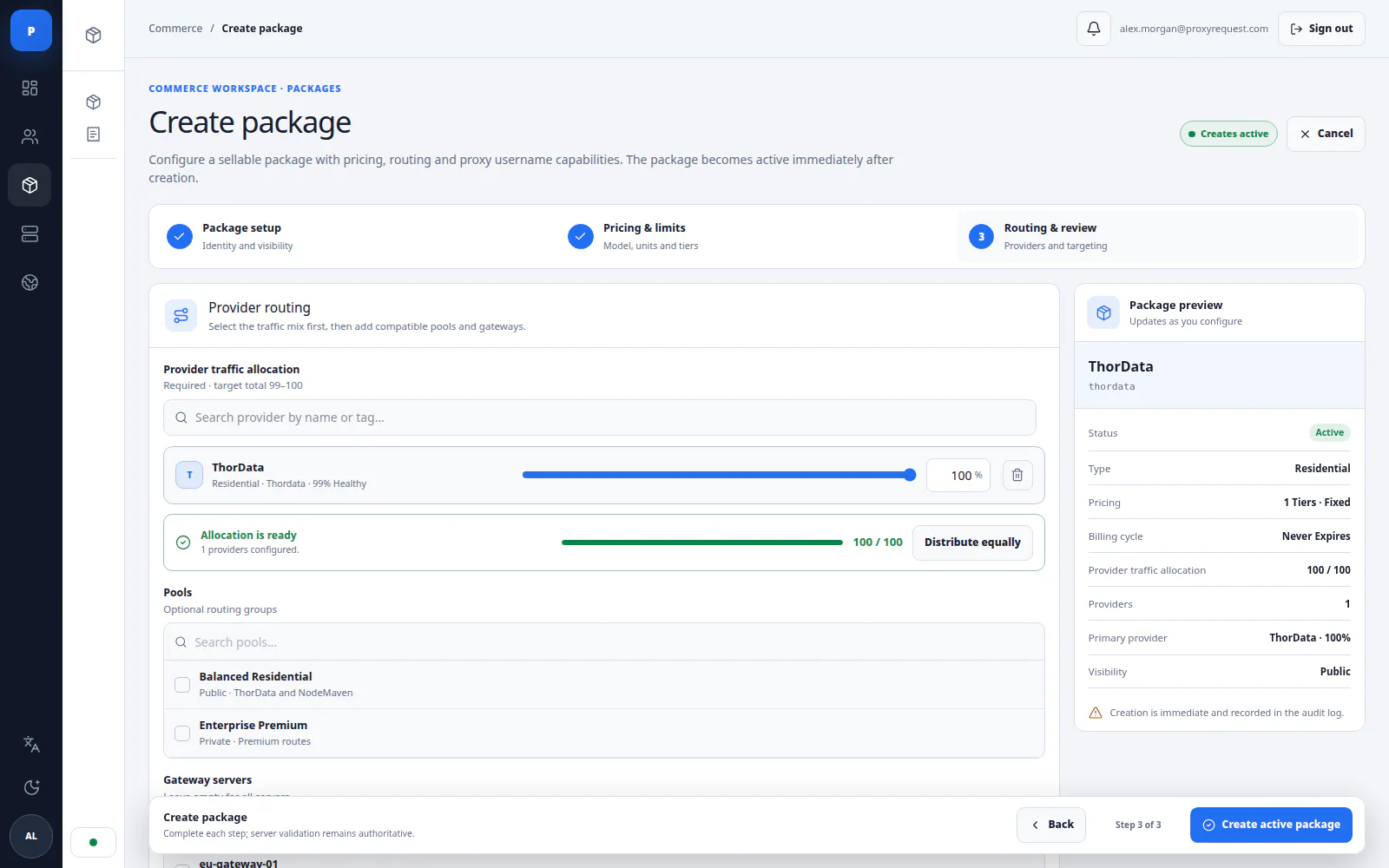
Visual upstream mixer with drag-to-adjust weights
Redesigned the mixer UI to support slider-based weight allocation. Changes are previewed before saving and applied to the live routing table without session disruption.
#1148uirouting
Automatic health-based traffic shifting
New provider scoring engine monitors success rate, latency p95, and error patterns. When a provider drops below threshold, traffic is redistributed proportionally across healthy upstreams — no manual intervention needed.
#1155healthcheck
Breaking Changes
Mixer config API endpoint moved from /api/mix to /api/v1/products/:id/mix
The old endpoint is deprecated and will be removed in v3.0. All automated tooling should update to the new resource-scoped path. The old path returns HTTP 301 through v2.9.
→ Migration notes
#1151api
Webhook Engine — Event Subscriptions & Delivery Logs
Full webhook system is now generally available. Subscribe to any platform event — sub-user created, bandwidth capped, upstream degraded — and get signed HTTP payloads delivered to your endpoint. Includes a delivery log with replay.
New
22 webhook event types across all platform resources
Events cover sub-user lifecycle, billing, upstream health, and system alerts. All payloads are signed with HMAC-SHA256 using your webhook secret. Full event catalog in the docs.
→ Webhook event reference
#1109webhooks
Delivery log with one-click replay
Every delivery attempt is logged with request/response headers and body. Failed deliveries can be replayed individually or in bulk from the dashboard or API.
#1115webhooksui
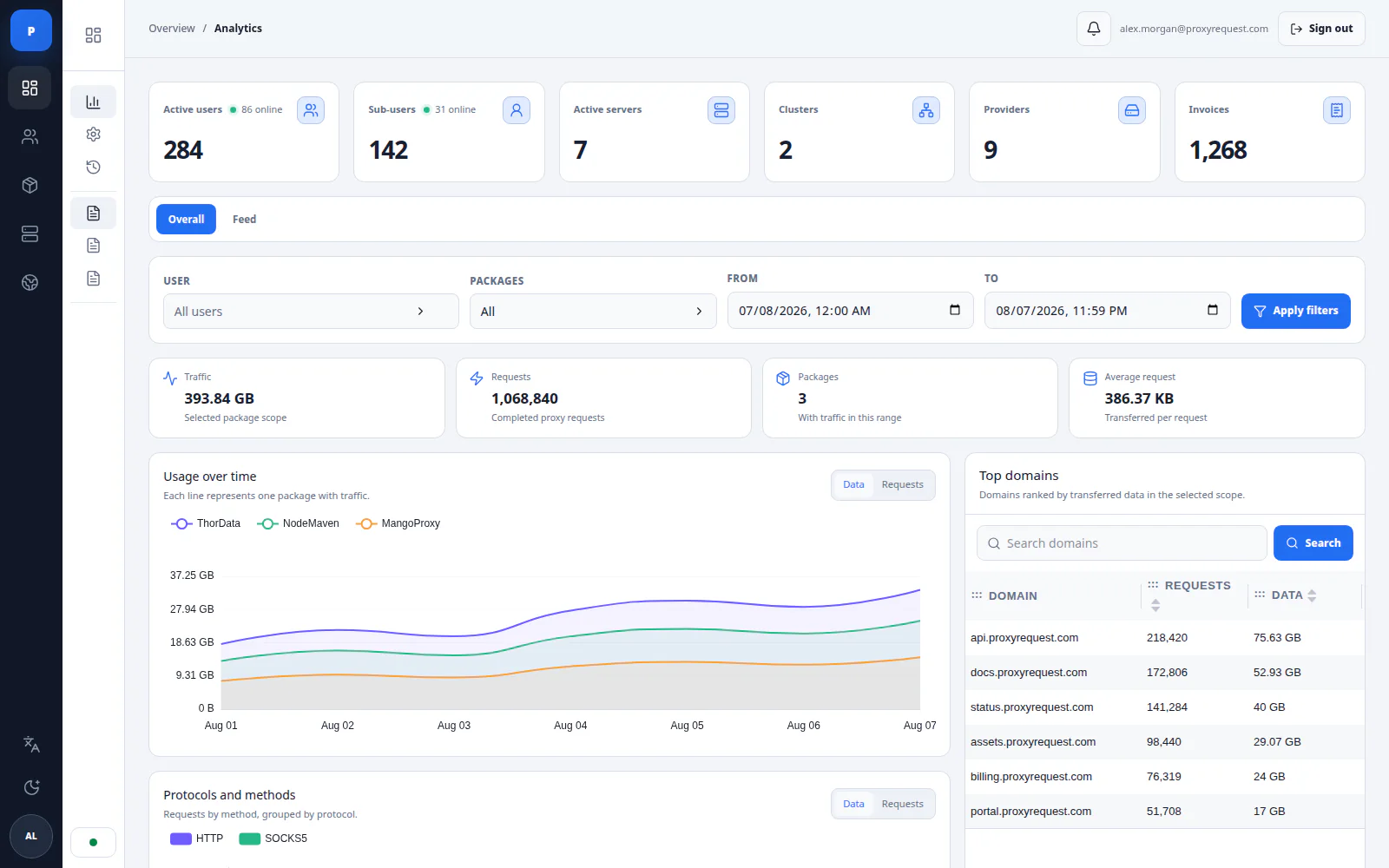
Analytics Overhaul — ClickHouse Backend & Retention Controls
Rewrote the analytics pipeline on ClickHouse. Queries that used to take 8–12 seconds on large accounts now return in under 400ms. Added configurable data retention policies and a new CSV export endpoint.
Improvements
Analytics queries 20–40× faster on accounts with 1TB+ monthly traffic
ClickHouse columnar storage with MergeTree partitioning by day replaces the previous Postgres-based analytics. Aggregation queries across 30-day windows complete in under 500ms regardless of data volume.
#1080analyticsperformance
Configurable data retention — 7 days to 24 months
Set per-account retention policies from the dashboard or API. Raw request logs can be retained shorter than aggregated stats to reduce storage costs.
#1088analytics
2025
SOCKS5 Framing Fixes & QUIC Proxy Support
Several framing-level bugs in the SOCKS5 implementation were resolved — particularly around UDP associate and domain name handling. QUIC proxy support ships as beta, available on the Pro tier.
Fixes
SOCKS5 UDP associate missing BND.ADDR for domain-type requests
Clients sending ATYP=0x03 (domain name) in UDP associate requests received a malformed BND response. Fixed response framing to correctly echo the request address type.
#1041socks5
QUIC proxy support (beta) — HTTP/3 tunneling over QUIC
Pro accounts can now use the QUIC endpoint for HTTP/3-capable targets. Reduces connection overhead by 60% on mobile-heavy traffic patterns. Opt in by pointing clients to quic.proxyrequest.com:443.
#1055quicbeta
Platform 2.0 — Complete Infrastructure Rewrite
Platform 2.0 is a ground-up rewrite of the proxy routing core, accounting pipeline, and admin UI. The v1 compatibility layer remains active through December 2025. Every component has been rebuilt for scale: the routing layer now runs in Go with zero-allocation hot paths, accounting uses NATS for sub-millisecond event delivery, and the dashboard is a rebuilt Vue.js SPA.
New
Go-based routing core with zero-allocation hot paths
The proxy routing layer was rewritten in Go. Internal routing overhead dropped from ~12ms to under 2ms p99. Buffer pools and pre-allocated structs eliminate GC pressure on the critical path.
#900core
NATS-based accounting with per-user real-time counters
Every byte transferred publishes a NATS message. The accountant aggregates usage in Redis with 1-second granularity. Sub-user bandwidth caps are enforced within milliseconds of the limit being hit.
#912accounting
Rebuilt admin dashboard — Vue.js SPA with real-time push
New dashboard uses WebSocket subscriptions to push live traffic data. No more page refreshes to see current state. Sub-user table handles 200K+ rows with virtualized rendering.
#955ui
Deprecated
Legacy v1 API — sunset December 31, 2025
All /api/v1/* endpoints remain active through end of 2025. The v2 API is a superset — migration is straightforward for most integrations. Sunset emails went out in July.
→ v1→v2 migration guide
#901api